
Starting a new craft can be exciting, but it can also feel a little overwhelming.
Walk into a craft store or browse online, and suddenly there are hundreds of different supplies, tools, materials, and gadgets to choose from. Do you really need all of them?
No, not really!
When you’re just getting started with crafting, crochet, or trying a new craft project, you don’t need to buy everything at once. A small collection of basic supplies can give you plenty of options while you learn what you enjoy.
At Crafting Lifestyles by Mary, I believe crafting should be enjoyable, creative, and approachable. Whether you’re interested in paper crafts, crochet, recycled crafts, or discovering products that make crafting easier, starting with the right basic materials can make all the difference.
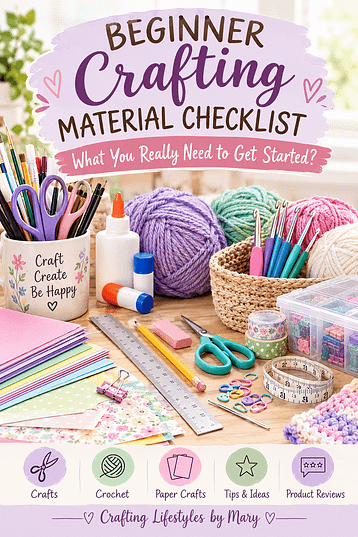
This beginner material checklist will help you build a useful craft supply collection without feeling like you need to purchase the entire craft store.
Basic Crafting Supplies for Beginners
There are certain supplies that are useful for many different types of crafts. Having these basics on hand means you’ll be ready when inspiration strikes.
1. Scissors
A good pair of scissors is one of the most useful tools in any craft area.
If you’re doing paper crafts, keep a pair specifically for paper. If you work with yarn or fabric, having another pair for those materials can help keep your scissors sharp and working properly.
Look for scissors that feel comfortable in your hand. You don’t necessarily need the most expensive pair when you’re beginning.
2. Ruler
A basic ruler comes in handy for measuring paper, creating straight lines, checking crochet projects, and making sure your finished projects are the size you want.
A 12-inch ruler is a great starting point.
3. Pencil and Eraser
A pencil is helpful for marking measurements, sketching ideas, making templates, and planning projects.
An eraser is just as important. When working with paper crafts, you may want to lightly mark where something should be folded or cut and then erase the marks afterward.
4. Craft Glue
Glue is another basic supply that can be used for countless projects.
For beginners, consider keeping a general-purpose craft glue, glue sticks, and possibly double-sided tape available. Different projects call for different adhesives, so over time you’ll discover which ones you prefer.
Always check the manufacturer’s instructions and make sure the adhesive is appropriate for the material you’re using.
5. Craft Storage
You don’t need a huge craft room to get organized.
Small plastic containers, pencil boxes, baskets, jars, and even recycled containers can be useful for keeping supplies together.
Try keeping frequently used items where they’re easy to reach. You are much more likely to craft when your supplies aren’t buried in a closet!
Beginner Paper Craft Checklist
Paper crafting is a wonderful place for beginners because you can create so many things with inexpensive supplies.
Here are some basic materials to consider:
- Cardstock
- Colored paper
- Patterned scrapbook paper
- Construction paper
- Scissors
- Ruler
- Pencil
- Eraser
- Glue
- Double-sided tape
- Paper clips
- Binder clips
- Decorative stickers
- Markers or colored pencils
You don’t need every color and pattern available.
Start with a few colors you enjoy and some neutral cardstock. As you create more projects, you can add specialty papers and embellishments when you need them.
One of my favorite things about paper crafting is that you can also use materials you already have around the house. Old greeting cards, cardboard boxes, cereal boxes, envelopes, paper bags, and other leftover materials can sometimes become the starting point for a completely new project.
That’s where paper and recycled crafts can be especially fun.
Beginner Crochet Material Checklist
If crochet is the craft you’re interested in learning, you can start with surprisingly few supplies.
Essential Crochet Supplies
Crochet hooks:
A few basic hook sizes are enough to get started. A medium-sized hook, such as a 5.0 mm hook, is a comfortable starting point for many beginners.
Yarn:
Choose a medium-weight yarn that is easy to see and handle. Very dark or extremely fuzzy yarn can make it harder to see your stitches when you’re learning.
Yarn needle:
You’ll need a yarn needle for weaving in your ends and finishing projects.
Scissors:
A small pair of sharp scissors is useful for cutting yarn.
Stitch markers:
These aren’t necessary for every beginner project, but they can be very helpful for keeping track of stitches and rounds.
Measuring tape:
A flexible measuring tape is useful when checking the size of your project.
That’s really all you need to begin.
You don’t need a giant collection of hooks or dozens of skeins of yarn before you make your first project.
Start small.
A ball of cotton yarn can be especially useful for practicing simple stitches and making small projects such as dishcloths, washcloths, scrubbies, or other useful items.
Helpful Crochet Supplies to Add Later
Once you’re comfortable with the basics, you might want to add:
- A crochet hook set
- More yarn weights
- Different yarn fibers
- Blocking mats
- Blocking pins
- Crochet stitch counters
- Project bags
- Yarn bowls
- Yarn organizers
- Pattern books
Add these gradually rather than buying everything at once.
Your crochet collection should grow according to the projects you actually enjoy making.
Materials for Trying New Crafts
One of the biggest mistakes beginners can make is buying a large amount of supplies before knowing whether they actually enjoy a particular craft.
Instead, try a small project first.
For example, if you want to try diamond painting, start with one smaller kit instead of purchasing several large projects.
If you’re interested in paper crafting, try a simple project using cardstock and basic adhesive before investing in specialty tools.
If crochet catches your attention, start with one skein of beginner-friendly yarn and an appropriate hook.
This approach saves money and gives you an opportunity to discover what you really like.
Don’t Forget the Materials You Already Have
Before heading to the craft store, take a look around your home.
You may already have many useful craft supplies.
Look for:
- Cardboard boxes
- Cereal boxes
- Paper bags
- Envelopes
- Empty containers
- Buttons
- Ribbon
- Scraps of paper
- Leftover yarn
- Clothespins
- Paper clips
- Binder clips
- Greeting cards
- Wrapping paper scraps
Some of these everyday materials can become the foundation of a fun craft project.
Reusing materials can also make crafting more affordable and give you an opportunity to experiment without worrying about wasting expensive supplies.
Beginner Product Review Checklist
If you’re purchasing craft supplies or tools, product reviews can be helpful before you spend your money.
But what should you look for when reading a review?
Here are a few things I recommend considering:
Does the product actually do what you need?
A product can have lots of features, but that doesn’t mean you’ll use them.
Think about what you’re actually planning to make.
Is it beginner-friendly?
Some tools are designed for experienced crafters and may have a learning curve.
If you’re new to crafting, look for products that are easy to understand and comfortable to use.
Is it durable?
Consider how often you’ll use the product.
A tool you use regularly may be worth investing a little more in if it holds up well over time.
Is it easy to store?
Crafting supplies can quickly take over a room if you’re not careful.
Before buying a large tool or storage system, think about where you’ll keep it.
Is the price reasonable for your needs?
The most expensive product isn’t automatically the right product for you.
Think about how frequently you’ll use it and whether the features justify the price.
Building Your Craft Supply Collection Slowly
You don’t have to build your entire craft collection overnight.
In fact, I recommend doing the opposite.
Start with the basics and add supplies as you need them.
For example, your first craft box might contain:
- Scissors
- Ruler
- Pencil
- Eraser
- Glue
- Cardstock
- Colored paper
- A few markers
- One or two crochet hooks
- A skein of yarn
- Yarn needle
- Small measuring tape
That’s enough to get you started with a surprising number of projects.
As you discover which crafts you enjoy most, you can begin adding specialty supplies.
This also helps prevent one of the biggest crafting problems: buying supplies for projects you never actually make!
Create a Crafting Space That Works for You
Your crafting space doesn’t have to be a dedicated craft room.
A small desk, kitchen table, corner of a room, or rolling cart can work perfectly well.
Keep your most frequently used supplies within easy reach and store specialty items separately.
Small containers can keep crochet hooks together, while baskets can hold yarn. Paper can be stored flat, and smaller embellishments can be sorted into little containers.
The goal isn’t to create a picture-perfect craft room.
The goal is to create a space that makes you want to sit down and create.
Final Beginner Crafting Checklist
Before starting your next project, use this simple checklist:
Basic supplies
☐ Scissors
☐ Ruler
☐ Pencil
☐ Eraser
☐ Glue
☐ Tape
☐ Storage containers
Paper crafts
☐ Cardstock
☐ Colored paper
☐ Patterned paper
☐ Markers or colored pencils
☐ Embellishments
Crochet
☐ Crochet hooks
☐ Beginner-friendly yarn
☐ Yarn needle
☐ Scissors
☐ Stitch markers
☐ Measuring tape
Optional supplies
☐ Project bags
☐ Specialty scissors
☐ Cutting tools
☐ Specialty adhesives
☐ Additional yarn weights
☐ Craft storage
Remember, this is a starting point—not a shopping requirement.
The best craft supply collection is one that fits your interests, your projects, your space, and your budget.
Start Creating!
Crafting doesn’t have to be complicated or expensive. Sometimes the simplest supplies can turn into the most enjoyable projects.
Whether you’re picking up a crochet hook for the first time, making a paper craft from an old cereal box, trying a new craft kit, or testing a new crafting tool, permit yourself to experiment.
You don’t have to be perfect.
You have to start.
As you discover the crafts you love, your collection of materials will naturally grow alongside your skills.
Here at Crafting Lifestyles by Mary, I’ll share easy craft ideas, crochet projects, paper and recycled crafts, and honest product reviews to make crafting a little easier and a lot more fun.
So gather a few supplies, find a comfortable spot, and let’s get crafting!
Happy crafting!


